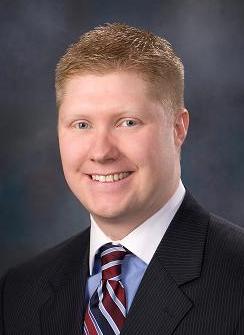
Norm Semanko doesn't seem to understand the tough economic times facing Idahoans. The fact is regular Idahoans have been hit hard by the economic downtown. They need solutions not partisan gamesmanship.
Yesterday I along with the 17 other House Democrats voted against the ill-named Health Freedom Act (HB 391). Unfortunately for Idahoans, this legislation is yet another distraction for lawmakers from our real work of getting Idahoans back to work. And for what end? So that Norm Semanko and others could try to score a political point.
Well, here is a news alert, Norm: I care more about fixing the problems for Idaho families than scoring political points (see exhibit A , exhibit B,and exhibit C). It's your insistence on playing partisan games instead of finding solutions that has degraded the public's confidence in our government. You keep playing games, I'll try to get some real work done and help my constituents back on the road to economic security.
Never mind that the legislation itself was foolish, and that is putting it politely. The legislation ignores Article VI, Clause 2 of the United States Constitution (aka the Supremacy Clause). It states, "This Constitution, and the Laws of the United States which shall be made in Pursuance thereof; and all Treaties made, or which shall be made, under the Authority of the United States, shall be the supreme Law of the Land; and the Judges in every State shall be bound thereby, any Thing in the Constitution or Laws of any State to the Contrary notwithstanding." But Mr. Semanko isn't interested in upholding the Constitution, that is only important when he and his party are trying to pacify the Tea Party folks.
Oh and on the final point, the bill has a $100,000 fiscal note. So rather than employing teachers we will be employing attorneys. Great idea. I suppose if legal community needs a stimulus package, Norm has the bill for them. That is not the vision I have for Idaho. I'd rather spend the taxpayer dollars someplace more valuable than in a partisan treasure hunt. Norm can keep scoring political points and I'll keep working for Idahoans. I trust that when Election Day comes the regular Idahoans that Norm is neglecting will let him know they would have rather the legislature spend more trying address their needs rather than serve his own partisan agenda.
Wednesday, February 10, 2010


Friday, February 5, 2010
Week Four Recap: Its all about jobs
Another week of the 2010 Legislative Session has come and gone. Things have been definitely cookin' and the weeks are beginning to blur together (already!). While Governor Otter continues to talk about ways to cut budgets and send mixed signals about everything from the Idaho Digital Learning Academy (IDLA) to the Idaho Department of Parks and Recreation, I along with legislative Democrats have been putting forward a vision for how Idaho gets out of the mess it is in. In two words, job creation.
We've all heard about how high unemployment is to blame for the budget woes, so it seems to reason that we should actually try to get to the root of the problem. Simply trying slash and burn the budget will not create a single job (in fact it will result in ending many jobs, both public and private) and thus will not solve the real problem (or in fact actually make it worse)! I can personally say that the unemployment bug has bit my own family in a very real and direct way. I suspect that story of family is familiar to nearly all Idahoans. Thus, the need to find a solution is real to my family as well.
To be clear, much of what we are experiencing is a national problem and so efforts at the state-level alone will not be a panacea. However, I think situation is bigger than just the impact of legislation. It is also about attitude. Right now, I am hearing from Governor Otter a message of retreat and despair. I suspect that message does nothing to improve consumer confidence or restore hope in the entrepreneurial community.
Instead of saying what we can't do, I think it’s important to say what we can do. We need to tell consumers what we know, which is that good times will be here again. We need to tell entrepreneurs that we believe in their own goals and that we will stand behind them and provide them the tools they need to succeed. After all, if they succeed, our budget will improve and we will all benefit.
Okay, so now you may be saying, what are the specifics?! Idaho Democratic legislators have proposed six bills, known as the Idaho Jobs and Opportunity Blueprint (IJOBs). These bills have been getting hearings and are beginning to get traction. In addition to the IJOBs proposals, I have personally worked on a job creation bill known as the Micro Enterprise Development Authority (MEDA). This legislation was recently spotlighted in the Idaho Business Review. After spending several weeks listening and incorporating suggestions, I expect to submit the legislation to the House Business Committee early next week.
So as I stated a few weeks back, if this legislative session is really only about the budget, then it'll be a waste of taxpayer dollars. Now is the time to be innovative and thoughtful. Now is the time to think about how to get us out of the budget hole we are in. Now it’s all about jobs!
Friday, January 22, 2010
Two Weeks Down
We are closing out week 2 of the 2010 legislative session and a lot has happened already. As expected the budget really has dominated the discussion. This has made some legislators coy as to their intentions with things and made others fearful of what budget cuts could mean to their favorite programs. I for one am particularly concerned about cuts to safety net programs and k-12 and post secondary education.
As a member of the House Health and Welfare Committee, I have spent considerable time doing what is known as rules review. Idaho is unique in that the legislature is given the responsibility of reviewing and approving of administrative rules that are promulgated by executive agencies. For those that are familiar with rules, they are essential the guidelines for agencies are to implement law. They carry virtually the same weight as law, although they are subservient to statute. Anyway, H&W always has a ton of rules and this year was no exception. We are still knee-deep in them and I suspect at least a week or two away from completion. Some of the rules can be controversial because they are where actual cuts to safety net programs exist. I have been pushing back against the notion that the budgets need to be cut as much as proposed. My rationale is two fold: 1) Safety net programs are being demanded by Idahoans at rates that have never been seen and 2) Many of the cuts will actually result in higher costs to the state in the long term.
The short-term thinking has really got a lot of downside. While it may be politically convenient to only think about the upcoming budget year, it is often times done at the detriment to the future prosperity. Unfortunately this short-term thinking has really become the slogan of the 2010 Legislative Session.
In the House Education Committee the same sort of short term thinking can be found. We have seen potential ideas that could save the state long-term and improve education outcomes dismissed. The problem is that the germane committee, in this case House Education, does not have the authority to dictate where the spending priorities are for education. That responsibility rests with the Joint Finance and Appropriation Committee (JFAC). Needless to say, I have a lot of issues with this model. It says that all the policy work that is done in House Education is meaningless. I'd much rather JFAC tell us the amount of money there is to spend on public education and higher education and then give the germane committees (House and Senate Education) the responsibility for deciding how it is best divvied up.
In terms of my own work, I continue to work on a few pieces of legislation. Here are four of them briefly:
- Micro Enterprise Development Association - Creates the Micro Enterprise Development Association, which is given the authority to give loans to small business (less than 50 employees) of $35,000 or less. They are created as independent corporate body politic, which essentially means they are private, but still oversight from the state (the same as the Idaho Housing and Finance Association). I'll dedicate a full post to this idea next week.
- Online Education Endorsement - Requires that all teachers or persons employed in the capacity of instructing students in an online program have an online education endorsement. This is important because there are programs outside of Idaho that are contracting with Idaho school districts and there is very little assurance of quality or competency.
- Master Advancement Pilot Project - Establishes a voluntary and limited pilot project that allows students to go through the public education system at their own pace. Early completion of the k-12 curriculum can earn a student a scholarship to be used at an Idaho public post-secondary institution. This is really about putting incentive into education.
- Homeless Shelter Temporary Sales Tax Exemption - Provides non-profit homeless shelters a two-year sales tax exemption. While I tend to dislike sales tax exemptions, this is one that will serve a real need and has a defined duration. The cost to the general fund is $15,000, but the benefits to the state will be much greater. There is a hearing on this legislation next week on Tuesday.
I have a few other bills, but those are three that I am putting a lot of effort into at this point. As always, I look forward to your feedback.
Tuesday, January 5, 2010
2010 Legislative Session Preview
The 2010 Legislative Session is less than a week away and the keyword for the upcoming session has already been coined, "Difficult."
As everyone that pays any bit of attention knows already the main issue for the Session will be the budget. As the AP reported, Speaker Denney is taking the position that, "Anything that has a price tag probably won't even get a hearing." Personally, while I understand that money is tight, limiting discourse on issues that have been lingering doesn't seem to be the best idea. The reality is that only 18 of the 105 legislators sit on the State's budget committee, JFAC. So what are the rest of us supposed to do? I'm not saying bills with large fiscal notes should necessarily pass, but to not even have the discussion seems to be a bit obstructionist. What if one of those ideas with a fiscal note had some really positive changes that could help the state in the near term? We may as well have the discussion so that we can become better prepared for later. Anyway, I'll get off from that soap box for now.
I do think that we'll see a big push to shrink state government, but the budget woes will just be a handy scapegoat. It'll be curious to see if Congress sends us anything we need to take action on from Health Care Reform. My guess is yes, but I'm not sure what. In terms of the budget cuts, I am particularly concerned about the budgets for Education (including if not especially higher education) and Health & Wealth. Seeing as how I am on both of the germane committees, I tend to care more about the issues of those departments than those that serve on other committees. My interest was piqued today when I visited the Westgate H&W office and saw a sight that nearly made me cry (literally). There were at minimum 75 people waiting to apply for a litany of social services. Many of the people had looks of despair on their faces and some of shame in their eyes. These aren't the deadbeats people think about that live off the system, these are hardworking folks that have been dealt a bad hand and need help getting back on their feet. It's just not right and contrary to what some people may say, I believe that helping others in a time of need is a proper role of government (but the government shouldn't be the only one helping, more on that later!).
In terms of my work this upcoming session, as I just indicated I'll do everything I can to help others in their time of need. Frankly, that is exactly why I ran in the first place. One of the best things we can do to help others is help them help themselves. That is why I am working on a couple of bills that are intended to create jobs, which I'll elaborate more on in the coming weeks. One of them I am really excited about would help create a fund to provide capital for small startups at no expense to the state. How? Wait and see!
I will also be leading a coalition of Idaho homeless shelters in their pursuit of a two-year temporary sales tax exemption. Before you get too far down the anti exemption expressway, hear me out. The fiscal note is about $15,000 statewide (that's peanuts), but the impact is huge. Considering the fact that a lot of people (if not all) that visit homeless shelters would otherwise probably be accessing state services, I think that this is a no-brainer. Also, philosophically speaking, I believe it is important that state government not be the only one providing social services. To that end empowering the faith based and community organizations like this is a step in the right direction in my perspective.
I also have a couple of education bills that I'll be working to get through. One of them, the Mastery Advancement Pilot Project is likely to cause some discomfort, but I believe that figuring out new ways of doing things in education is past due. The idea has received some press already and hopefully will get more momentum in the next few weeks.
There are a few others that I am working on as well, including local option authority, but in the name of brevity I'll address them in the near future.
Finally in terms of length of the session, I keep hearing that the Session may be over by the first week of April. Of course, I've heard similar predictions before, but maybe they mean it this time. My prediction for an end date is April 9 (calling all bets). While this may indeed be one of the most difficult sessions in a long time, I still believe that difficult is no match for perseverance.
Wednesday, November 4, 2009
Three ways to help the budget
I think that the criticism that being unwilling to vote to cut programs without another solution is right on. After all, as a state legislator, I along with the rest of the legislature have the constitutional requirement to balance the budget. Last year I was more than just a little hesitant about cutting programs, especially in education (at all levels) and Medicaid. This year, those cuts are looking like they may be even more draconian than ever before. In order show that I am serious about finding solutions, I have come up with the following three ideas to help trim the state budget, so that cuts to vital programs can be minimized.
- Modify the property tax legislation from the 2006 Extraordinary Session to only apply to owner occupied residences,
- Institute a new program for paroling and otherwise taking non-violent offenders out of our expensive prisons and into other forms of corrections (e.g. house arrest, work release, etc.), and
- Restructuring of state government by combining some state agencies, where doing so makes sense both fiscally and from an operations standpoint.
While there are many other solutions, and these three ideas aren't the panacea for our budget woes, they certainly would make a significant dent in the budget shortfall. In the upcoming days and weeks, I'll provide more details and data about my ideas and explain why I think that they are superior to simply cutting state programs that serve Idahoans. Stay tuned.
Tuesday, October 27, 2009
Off Topic Post - BCS Mess, Again.
Well, its that time of year again. The Bowl Championship Series (BCS) is out ranking collegiate football teams and Boise State is at the center of the controversy just as as it was last year. At issue is whether or not an undefeated BSU team deserves to go to a so-called BCS Bowl Game where the riches and exposure are that of some mythical treasure island.
In the first week of the BCS rankings BSU was ranked a regular season best fourth place, but that all changed this week. BSU got moved back to seventh place and now sits behind Texas Christian, the other non-BCS conference school that is looking to be this year's BCS Buster. As you might recall, the same thing happened last year when BSU and Utah were fighting for a similar distinction. However, this year is different.
This year is different because the spotlight has been shined ever brighter upon the BCS and its uppity elitist conferences by not only Congress, but also President Obama. In Congress, claims have been made that the BCS may be in violation of anti-trust laws. Of course, the BCS conspirators have lifted their nose and tried to laugh off such accusations as nonsense. Well, frankly, if BSU and TCU end up in the top eight at the end of the year, but one of the is left out, it won't be nonsense it will be because of cents (and millions of dollars).
That is why, as big of BSU football fan as I might be (I've gone to games since before there was a blue field and have the schedule poster to prove it), I am hoping that both BSU and TCU end the seasons undefeated and ranked in the top 8. I am also hoping that one of them gets left out because if they do, then the claim that the BCS is nothing more than an anti-competitive money passing scheme will be proved accurate. You see, if BSU and TCU are both in the top 8 or higher and if it really is about placing the best teams in college football against one another, then there will not be a logical basis in which to exclude either team. That is, of course, unless its not about placing the best teams each against each other.
Now, you can bet that BCS conference officials are talking and trying to figure out how to weasel their way out of this one. Perhaps they made some calls to the SEC officiating crews and are trying to figure out the going rate is to throw football games. Either way, they'll be ready with some pigheaded press release that tries to pacify the populace, but we can't let it happen. The BCS is bigger than just some stupid college football games. It is about doing the right thing and giving everyone a fair shot. After all, fighting for the little guy and making things is equal, is something that all of us, football fans and non-fans alike, can agree on
Monday, October 19, 2009
What's next?
On Sunday, October 11, The Idaho Statesman ran my op-ed dealing with what I view as a real disconnect between Governor Otter and regular Idahoans. In the print edition, the Statesman placed my piece right next to one by House Assistant Majority Leader Scott Bedke. Representative Bedke asserted that now wasn't the time for rash measures and insinuated that he and his majority team in the House would protect the taxpayer. The phrase, "starve the beast," comes to mind. At the same time, the Statesman's Editorial Board also ran a piece discussing the issue and proclaiming that, "Lawmakers must defend Medicaid, higher education."
The three opinion pieces generated a fair amount of comments, some of which related to a question of how to protect programs, without raising taxes. I'd like to respond.
First, I have no appetite whatsoever to raise taxes on hard working Idahoans, that option is off the table.
Second, I'd like to clear up some of the misinformation Rep. Bedke disseminated. I, and no one in the legislature that I know of, has advocated for depleting ALL of the rainy day funds. I agree that some cuts will be required. Efficiencies, as the Guv suggests, should help, some. For example, it would be wise to combine some agencies together to reduce administrative costs (e.g. Ag and Water Resources, or Lands and Parks and Rec and Fish and Game). Washington State is doing so and I believe we can too.
I also think we could revamp our corrections systems, which would yield some significant savings. For example, I would move certain non-violent offenders out of prison and into work release. We are doing this some right now, but I think more could be done.
We also need to partner more intentionally with faith-based and community organizations (FBCOs). I attempted last year to put this idea into action with HCR 11, which ultimately stalled in Senate State Affairs Committee because Senators were concerned that it wasn't the Guv's idea and didn't want to "go over him." By investing in FBCOs, we reduce the burden to the State and subsequently taxpayers. In many cases FBCOs can do more with less because of partnerships they leverage within their communities. Plus, unlike state government, they know their communities better because they are in their communities. This has the potential to save a lot of money.
Lastly, not spending rainy day funds has the same practical outcome of slowing the economic recovery. State government, whether the Governor or Rep. Bedke like it, is a very important part of Idaho's gross state product. By unnecessarily cutting state government you are cutting jobs. Jobs that families rely upon. Families, that without those jobs, will end up tapping our already strained social services. That will lengthen the recession for regular Idahoans. Economist forecast a mostly full recovery including job creation by December 2010 at the latest. That is good news for Idahoans, regular Idahoans.
Subscribe to:
Posts (Atom)